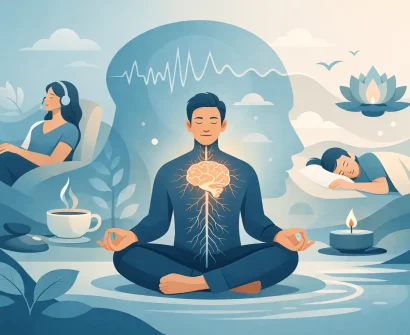



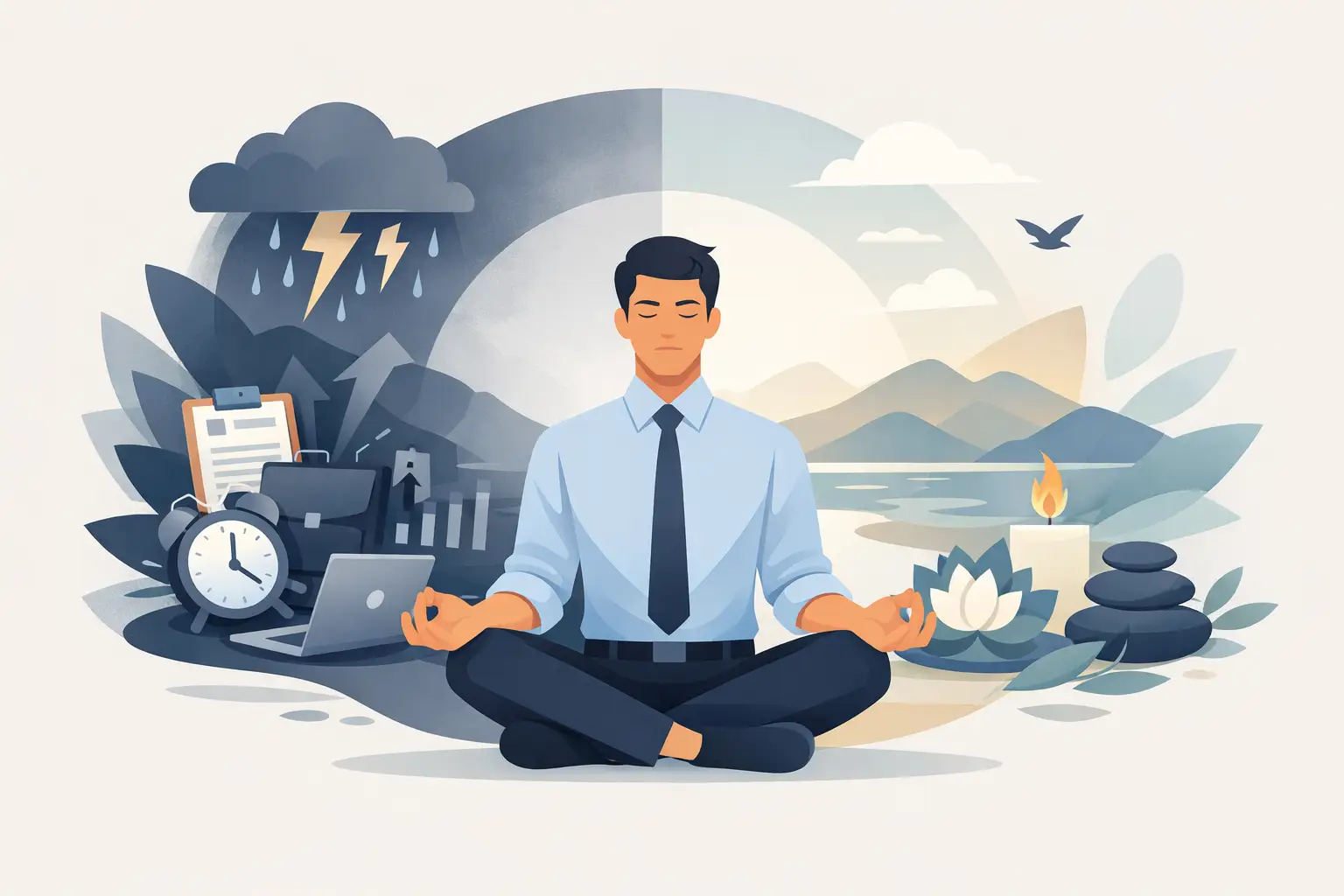
There's a kind of pressure that goes unseen. You go to work, get things done, reply to messages, and appear composed on the outside, but inside there's constant strain, as if you're under endless pressure. And if you're asking, "How do I deal with this internal pressure?" most likely you're not looking for quick fixes as much as you're seeking genuine relief and a deeper understanding of what's happening to you, not just a superficial one.
Internal pressure isn't always a sign of weakness, nor does it mean you're overreacting or ungrateful for what you have. Sometimes it's your nervous system's way of trying to keep you on edge, even when the danger is no longer present. And sometimes it's the result of an internal conflict between how you feel and how you believe you should be. Therefore, dealing with it doesn't begin with forcing yourself to be calm, but rather with understanding the message this pressure is conveying.
How do I deal with internal stress when I don't know its cause?
The most difficult thing about internal pressure is that it can be vague. There's no single, clear cause, yet you feel heaviness in your chest, tightness in your stomach, racing thoughts, or a desire to withdraw. This is where many people err when they try to solve the whole problem logically. They review the causes, analyze, and consider endless possibilities, only to find that the pressure increases instead of lessens.
When you don't know why, start with what's certain: the body doesn't lie. If your body is tense, something inside you doesn't feel completely secure. You don't need to understand the whole story right away. What's required first is to acknowledge that what you're feeling is real, even if you can't explain it yet.
Many high-achieving people experience this contradiction. Their lives appear stable, but internally they are in a state of turmoil. Often, the cause is not just the current event, but a long-standing accumulation of repression, adaptation, overexertion, and a habit of pushing one's limits until stress becomes a way of life.
Not all internal pressure needs to be resisted.
Some stress needs to be managed, and some needs to be listened to. The difference between the two is important. If you treat every unpleasant feeling as an enemy to be eliminated immediately, you may increase the internal conflict. Because part of you is trying to say something, and another part is telling it to be silent. And that's when the pain is amplified.
Sometimes inner pressure stems from an unacknowledged fear. Sometimes from repressed anger. And sometimes from an old sorrow that hasn't found a safe space to surface. It might also be the result of an inner part that has learned your worth is tied to achievement, keeping you under pressure so you don't stop. This doesn't mean there's anything wrong with you. It simply means you have internal patterns that were formed to protect you, but are now draining you.
Start with the body before the mind.
If your nervous system is in a state of heightened alert, positive affirmations alone won't help. You'll understand the words, but you won't feel them. Therefore, one of the most effective steps is to begin by calming your body first. Not because the body is separate from the mind, but because it's the closest gateway to inner peace.
Take a slower breath than usual, not a forceful one. Place your feet on the ground and pay attention to their weight. Look around you and mentally name five things you see. These aren't superficial tricks, as some might think. They are direct messages to the nervous system saying: I am here now, and I am not in the danger zone of the past.
If you notice tension building up in your jaw, shoulders, or chest, don't try to eliminate the feeling. Just acknowledge it. Sometimes, simply shifting from being completely absorbed by the pressure to noticing it is enough to lessen its intensity. When you say to yourself, "There's pressure in my chest," instead of, "I'm falling apart," you begin to reclaim an inner space of awareness and control.
What really calms you down?
This varies from person to person. Some find solace in slow walking, others in quiet, distraction-free sitting, and still others need physical release to move, tremble, or cry. The important thing is not to search for the perfect method, but rather the method that makes your body feel less threatened. What works for others may not work for you, and that's perfectly normal.
Name the conflict instead of swallowing it.
In many cases, inner pressure isn't just pressure, it's a struggle. Part of you wants relief, while another part accuses you of falling short. Part wants to tell the truth, while another fears loss or rejection. Part wants change, while another is terrified of the unknown. When this struggle remains unnamed, it transforms into a pervasive anxiety that consumes you throughout the day.
Here, simple and honest language works. Ask yourself: What part of me is pressuring me right now? Is it a fearful part? A critic? A perfectionist part? An angry part? An exhausted part? This type of question isn't meant to diagnose, but to unravel the complexities. When you differentiate between yourself and the part driving the pressure, dealing with it becomes possible.
This perspective is close to the approach of deep therapy, which doesn't see the individual as a single problem, but rather as an internal system with parts that try to protect themselves in different ways. Some of these parts push you to overexert yourself, some to withdraw, and some to engage in self-flagellation. The more you respond to them with awareness and compassion instead of repression, the more the pressure begins to lose its grip.
How do I deal with internal stress at its root?
If the stress keeps recurring despite your best efforts, it's likely not just a recent occurrence. It could be linked to a history of chronic stress, overexertion, or experiences that have led you to believe that security is conditional. The most important question then becomes not just how to calm down, but why is this stress returning with such intensity?
The root cause might be an old belief such as: I must always be strong. Or: I have no right to ask for support. Or: If I make a mistake, I will lose my worth. These beliefs don't just function as fleeting thoughts, but as deep-seated programs that shape the body's, emotions', and relationships' responses.
Addressing the root causes requires honesty, patience, and sometimes safe professional support. This is because some of what we carry within us cannot be resolved through cognitive awareness alone. Some things require a structured space—one of understanding, neurological organization, and reconnection with oneself—not just general advice. This is precisely what makes the trauma-awareness approach different from typical motivational rhetoric. It doesn't ask you to become tougher, but rather to become more connected to yourself.
What increases internal pressure without us noticing?
One of the biggest stressors is consistently ignoring subtle warning signs. Disrupted sleep, irritability, difficulty concentrating, and a constant feeling of being behind are not minor details. So are constant comparisons, living under a ceiling of unrealistic expectations, excessive digital consumption, and staying in draining relationships while convincing yourself that everything is fine.
Another hidden factor is using awareness against yourself. You become familiar with many terms, you understand that you have patterns, wounds, and traumas, and then you turn this understanding into a new tool for judging yourself. You ask: Why haven't I healed yet? Why am I still affected? Here, awareness itself becomes a source of pressure. True healing doesn't operate with such harshness.
When do you need deeper support?
If internal pressure is affecting your sleep, relationships, and ability to work or attend classes, or if you find yourself stuck in the same cycle despite sincere efforts, this isn't an exaggeration or a personal failure. It's a sign that what's happening is deeper than willpower alone can resolve.
A safe space doesn't mean something inside you is broken. It means you no longer want to carry everything alone. And in the right spaces, a person often begins to see what they hadn't seen before—not because they were oblivious, but because they were within the pressure itself, lacking the distance to understand it.
This type of work, as we present it in Montaser Moussa’s space, focuses not only on silencing the symptoms, but on understanding what generated them, and how to restore your relationship with your body, your feelings, and your inner parts in a safer and more balanced way.
Don't make it your goal to make all feelings disappear.
A healthy approach to internal stress doesn't mean becoming unaffected. Nor does it mean living in perpetual tranquility. The truest goal is to increase your capacity to stay with yourself without collapsing, to recognize your signals earlier, and to respond to them before they accumulate and explode.
There will be days when you feel more stressed than others. This doesn't mean you're back to square one. Sometimes, real progress is that you're noticing things faster, seeking support faster, hurting yourself less, and trusting that what you're feeling can be contained instead of run away from it.
If you're asking how to deal with inner turmoil, start here: Don't fight yourself while you're hurting. Get closer to yourself. Listen to your body. Name the struggle. And take the idea of healing seriously, as seriously as you're carrying inside. Sometimes the first step to relief isn't becoming stronger, but becoming more honest with what your heart and nervous system need right now.