


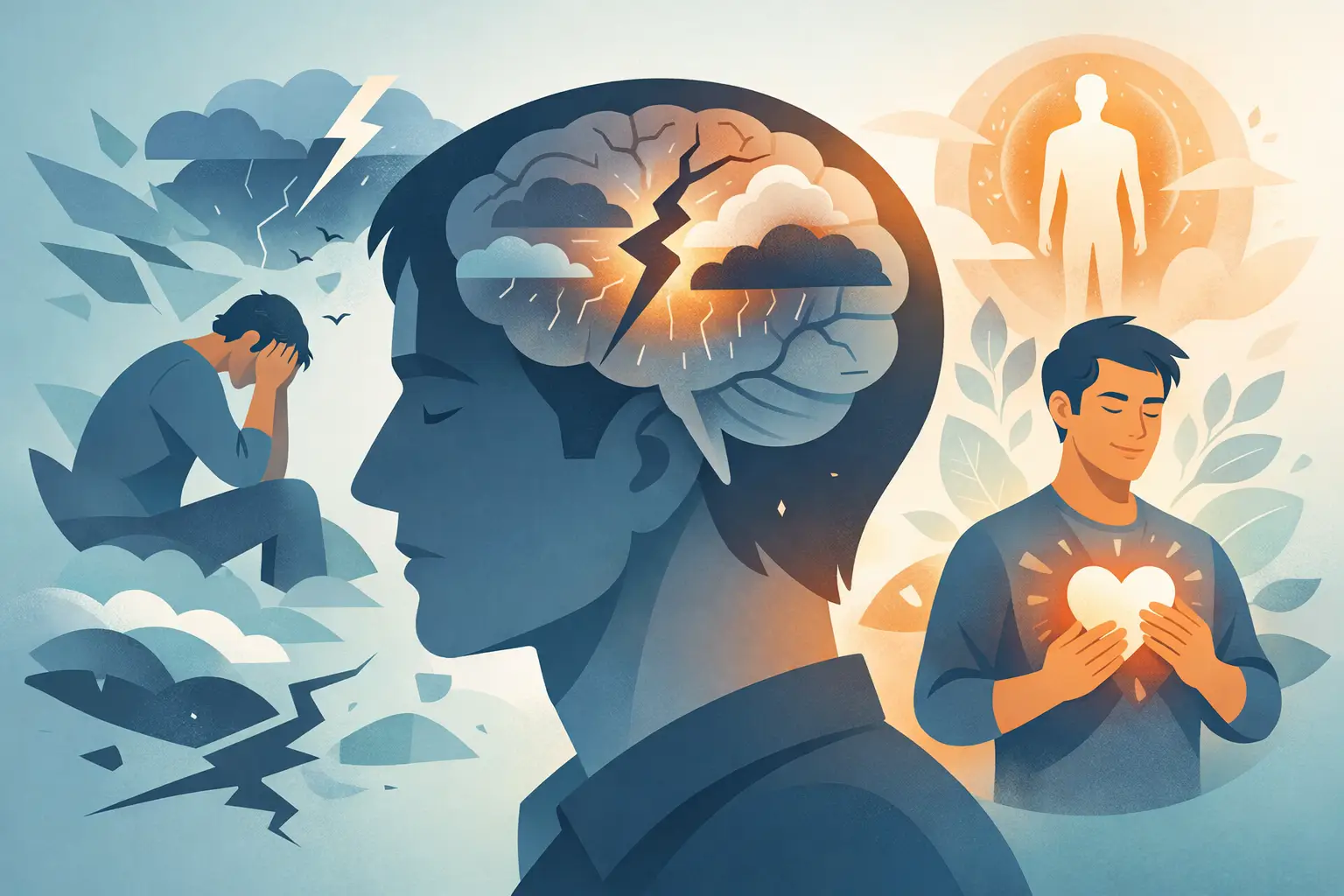
Your life may seem stable from the outside: work, responsibilities, achievements, and perhaps seemingly good relationships. But in a moment of simple criticism, silence from a loved one, or accumulated pressure, you find yourself in acute anxiety, uncharacteristic anger, or complete withdrawal. A guide to understanding trauma in adults Not to diagnose you, but to put into clear language what might be happening inside you when your nervous system treats the present as an old threat.
Trauma doesn't always mean a major, obvious incident. Sometimes it's years of insecurity, emotional neglect, harsh expectations, or being forced to be strong before your time. Unless it finds a safe space to be felt and understood, it doesn't necessarily disappear. It may simply change form: into insomnia, anxiety, a frantic search for control, difficulty intimacy, or a chronic feeling that something is missing.
What is shock really like for adults?
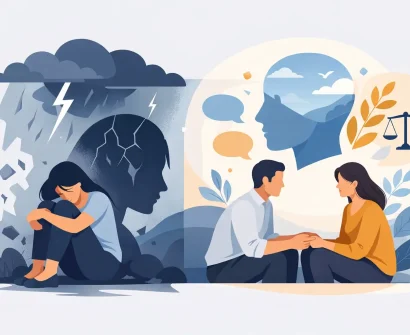
Trauma is not just the event itself. It is the impact that an event or its repetition leaves on the body and mind when the experience exceeds your capacity to cope and process it at that moment. A child who is constantly reprimanded, left alone with their fears, or told to suppress their tears may learn that expressing themselves is dangerous and that love is conditional. As an adult, these internalized rules can continue to guide their decisions and relationships without them even realizing it.
Therefore, comparing your pain to others is not helpful. Someone might say, "Nothing major happened to me," only to discover that their body is in a constant state of alert. The more honest question isn't, "Was my experience bad enough?" but rather, "What has my body learned about safety, need, closeness, and error?"
There are traumas linked to a single event, such as an accident, sudden loss, or assault. And there are cumulative traumas that arise from repeated experiences at home, school, or in relationships. Both deserve understanding and care, but the path to recovery can vary depending on personal history, available support, and the severity of current symptoms.
How does trauma manifest itself years later?
The nervous system doesn't choose to respond rationally in a moment of threat. It tries to protect itself. That's why you might fight, flee, freeze, or appease others to avoid confrontation. These aren't character flaws, nor are they evidence of a lack of faith or willpower. They are survival strategies that made sense at one time, even if they seem exhausting and costly today.
Fighting might manifest as quick temper, defensiveness, and a need to win every argument. Avoiding might appear as constant busyness, overworking, scrolling endlessly on the phone, or withdrawing from difficult conversations. Freezing might seem like an inability to make decisions, mental fog, or a disconnection from both emotions and body. Pleasing might show in saying "yes" when you're exhausted, apologizing for your needs, and a fear of setting clear boundaries.
The problem is that These patterns It may bring short-term comfort, but it deepens the feeling of loneliness later on. A person who pleases everyone may seem calm and well-liked, but deep down, they don't know what they want. And a person who accomplishes things relentlessly may be admired, but they can't sit with themselves without anxiety. Outward success doesn't eliminate inner pain.
Motivators that don't seem logical
A trigger is something in the present that awakens an old neural memory. It might be a tone of voice, a disapproving look, a delayed response, a crowded room, or a feeling that you've made a mistake. This doesn't mean you're literally reliving the past, but rather that your body is reading a familiar cue and preparing to protect itself before your mind can calmly assess the situation.
Therefore, you might know in your mind that your partner didn't mean to hurt you, yet feel intense discomfort or an overwhelming urge to withdraw. Knowledge alone is important, but it's not always enough. Recovery also involves helping the body gradually test for safety, not forcing it to move beyond what hasn't been fully realized.
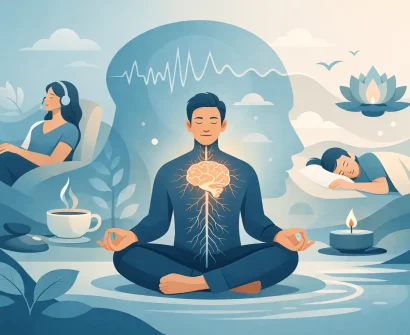
Understanding trauma in adults starts with the body.
Many people try to resolve pain by dwelling on it more: analyzing the past, blaming themselves, or gathering new explanations. Understanding can be helpful, but it shouldn't become another way to escape the feeling. Trauma often manifests physically before words: tightness in the chest, jaw clenching, heaviness in the stomach, a racing pulse, or numbness of unknown origin.
Start with a simple, unpressured observation. When you're upset, ask yourself: What's happening to my body right now? Where do I feel it? Am I breathing fast? Are my shoulders tense? Then add a kinder question: What does this part of me need right now? The answer might be water, a little movement, a break, a safe connection, or simply acknowledging that you're tired.
Don't force yourself to relive painful memories or delve into the details of the past alone. Over-stimulation can intensify symptoms, especially if you have a history of breakups, panic attacks, or intrusive memories. Deep work requires measured doses and a pace that respects your nervous system's capacity, not a relentless confrontation in the name of courage.
From awareness to the new response
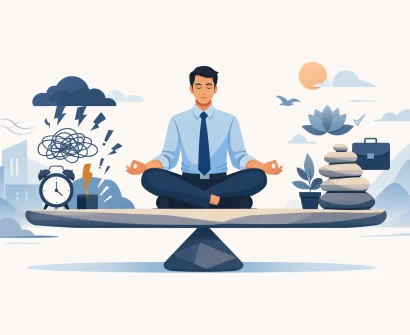
Healing doesn't mean being calm all the time, nor does it mean erasing your past. It means widening the gap between the trigger and the reaction. In that space, you have a choice: to ask for time instead of exploding, to say "no" without lengthy justifications, to distinguish between an old fear and a present danger, and to return to yourself after the turmoil instead of punishing yourself.
Simple practices can help if they suit you. Try slow, unforced breathing, taking a walk while observing your surroundings, writing about your feelings in non-judgmental language, or naming five things you notice when you feel distracted. These aren't magic solutions, but they are small signals to your nervous system that the present moment is bearable.
Secure relationships are also an essential part of recovery. Security doesn't mean a relationship without conflict, but rather one where you can express your feelings without humiliation, threats, or repeated disregard. Sometimes, recovery lies in learning to choose who deserves your closeness, not in trying harder to convince someone who doesn't see you.
Why does specialized support change the course of events?
When responses are deeply ingrained, you may need a professional space that addresses the trauma rather than just general advice. Trauma-conscious approaches view symptoms as protective messages, not problems to be quickly eliminated. This space might involve working with conflicting parts of the psyche, understanding that one part desires closeness while another fears it, or gradually building the body's capacity to release tension.
Some approaches utilize frameworks such as Compassionate Inquiry, Internal Family Systems, NARM®, and TRE®, but the tool alone is not the solution. What matters most is having a qualified practitioner, a safe and secure relationship with clear boundaries, and a plan that works for you. If symptoms are severe, or if there is deep depression, thoughts of self-harm, or harmful substance use, support from a licensed mental health professional or local emergency services is the safest course of action.
Beware of anyone who promises a quick cure or asks you to reveal your deepest wounds before building trust and stability. True recovery is not a spectacle or a race. It's a process that restores your ability to feel without being overwhelmed, to remember without being completely pulled into the past, and to live by choice, not just by survival.
Don't let blame become the language of your relationship with yourself.
Perhaps you made decisions today that you don't understand. Perhaps you stayed in a toxic relationship, distanced yourself from people you love, or pushed yourself to the brink of collapse. Accountability is important, but it's different from self-flagellation. When you understand your protection patterns, you don't become absolved of responsibility, but rather better equipped to bear it with awareness and compassion.
The next time you experience a strong reaction, ask yourself: What am I trying to protect? How old does this feeling feel? And what's the smallest, safest step I can take right now? It could be sending an honest message, postponing a decision, setting a limit, or asking for help. Small, repetitive steps build more inner confidence than big, unsustainable promises.
It's not too late because you're beginning to understand now. The parts of you that have been dormant weren't fighting against you; they were trying to bring you to this moment. When you meet them with honesty, security, and the right support, you can begin to learn a new truth: you no longer have to survive alone.